Stop treating orientation like evaluation. Trial pages fail because they ask visitors to "decide" before they "understand."
The 3 reasons your sign-ups are bleeding:
- Cognitive Overload: You’re giving too much info, too fast.
- Vague Value: It’s not clear exactly what the product does .
- Assumed Trust: You’re asking for a sign-up before you’ve earned it.
The Fix: Collapse these hurdles into one low-friction path before changing your price.
You've done the hard part.
You built the product. You wrote the ads. You got people to click.
And then — nothing. Or close to nothing.
The traffic lands on your trial sign-up page, drifts around for a few seconds, and leaves. You refresh the analytics. The bounce rate is high. The conversion rate is low. The sign-ups trickle in.
Most founders assume this is a product problem or a pricing problem. It feels logical: if people aren't signing up, maybe the offer isn't right. Maybe the price is too high. Maybe the market isn't ready.
In most cases, the diagnosis is wrong.
The product is fine. The price is fine. The market is there — you have the clicks to prove it. The problem is what happens on the page itself, in the few seconds between arrival and decision.
This article breaks down why trial pages fail to convert, what the real causes are, and what you can do to fix them.
The Real Problem Is Not Your Product

Here is the uncomfortable truth about low-converting trial pages: visitors are not leaving because they dislike your product. They are leaving because they cannot quickly understand what your product does, who it is for, and whether it is worth the risk of signing up.
That is a messaging and trust problem. Not a product problem.
When a visitor arrives on your trial page, they are not in evaluation mode yet. They are in orientation mode. They are trying to answer a simple set of questions in a very short window:
- What is this?
- Is this for me?
- Why should I trust it?
- What happens if I click this button?
If your page does not answer those questions clearly, quickly, and confidently, the visitor leaves. Not because they rejected your product — but because they never understood it well enough to make a decision.
Why Trial Pages Create Invisible Friction
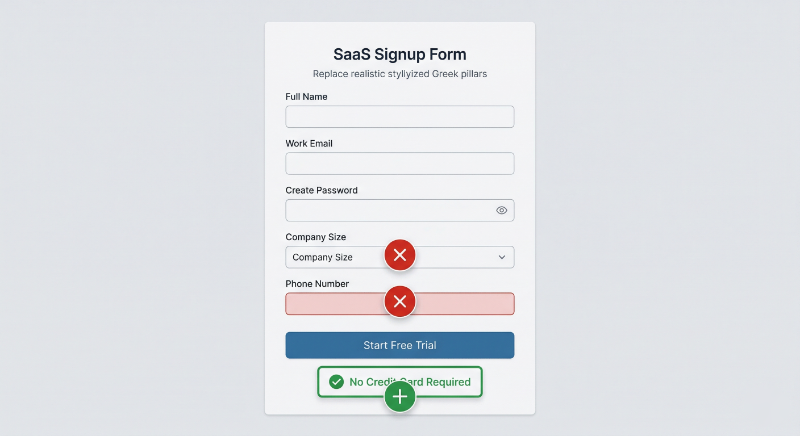
Most trial sign-up pages fail for one of three reasons.
1. The page is asking visitors to do too many jobs at once.
Cognitive load theory tells us that the more mental work a person has to do, the less likely they are to take action. A typical trial page asks a first-time visitor to do several things simultaneously: understand what the product does, evaluate whether it solves their specific problem, assess the risk of signing up, and decide to act.
That is not a single decision. That is a sequence of micro-decisions stacked on top of each other. When the page does not help visitors move through those stages in order, they experience friction without knowing why — and they leave.
2. The value proposition is too vague to create urgency.
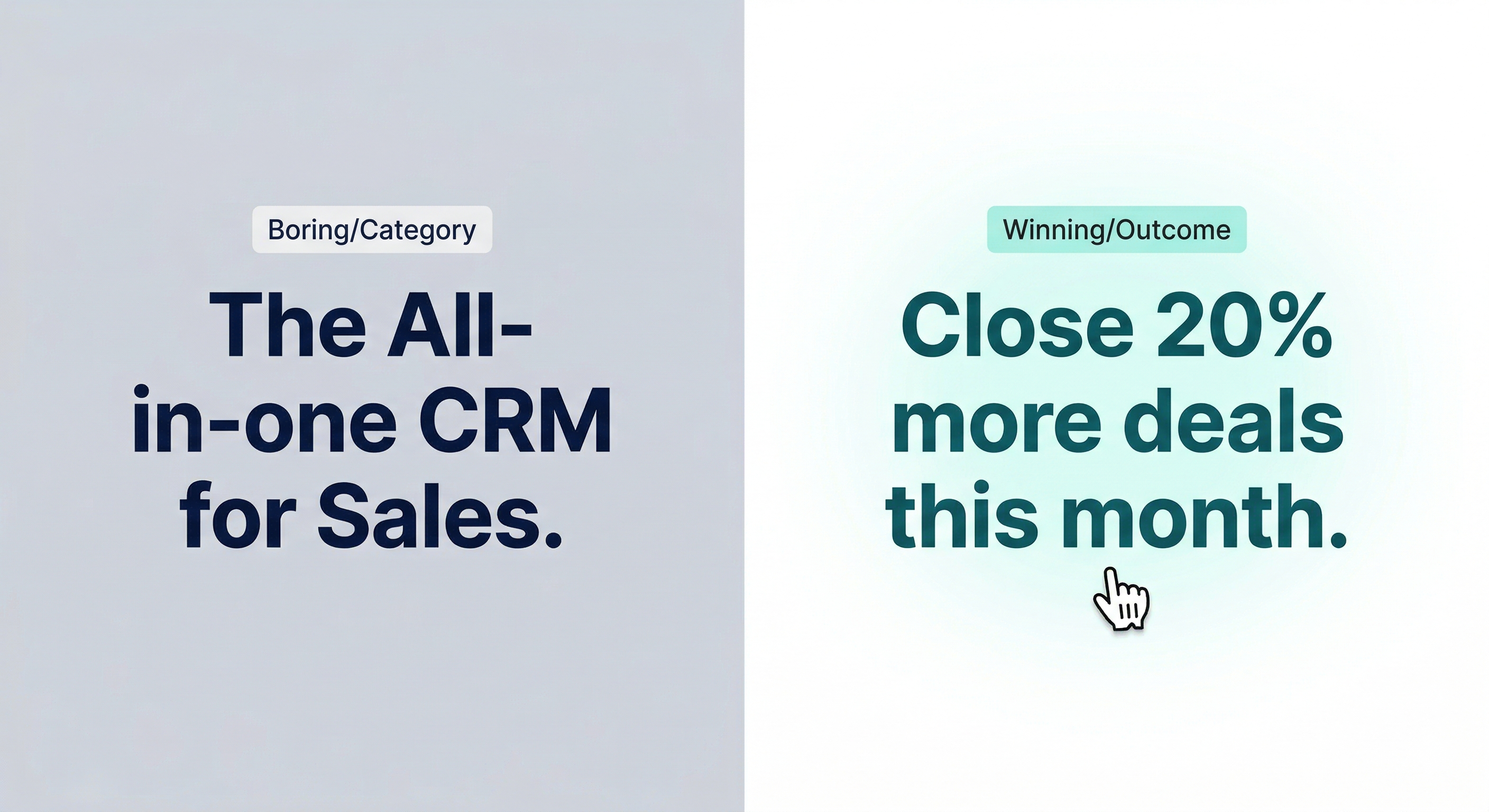
Trial pages often describe what a product is rather than what it does for the person reading . Phrases like "the all-in-one platform for growing teams" or "a smarter way to manage your workflow" are technically accurate and functionally meaningless. They do not create the moment of recognition that makes a visitor think: this is for me .
Specific beats general, every time. A headline that says "Stop losing deals in your inbox — close faster with automated follow-up" converts better than one that says "Sales software for modern teams." The first one speaks to a pain the visitor already feels. The second one describes a category.
3. Trust is assumed rather than built.
SaaS founders often underestimate how much perceived risk exists in a trial sign-up. Even a free trial requires a commitment — an email address, sometimes a credit card, time spent onboarding, potential data input. For a first-time visitor with no prior relationship with your brand, that is not nothing.
Pages that convert well do not assume trust. They build it, actively and structurally — through social proof, credibility signals, risk reducers, and specific evidence that other people have tried this and it worked.
⚠️ THE TESTIMONIAL TRAP
Most social proof is actually Negative Proof . When you display vague praise like "Great tool!" , you signal that you don't have real, measurable results to share.
The Rule: If a testimonial could apply to any product in any category, it’s white noise. It increases skepticism.
The Fix: Use testimonials that name a specific win :
- Bad: "Awesome platform!"
- Good: "Reduced our onboarding time by 40% in the first week."
The Five-Second Test Your Page Is Probably Failing
The industry standard for page clarity is the Five-Second Test . When you see it in action, it’s a wake-up call for how little time you actually have to grab a visitor’s attention. It’s a simple diagnostic that reveals most conversion problems immediately.
Ask a person who has never seen your product to look at your trial page for five seconds, then close it and answer three questions:
- What does this product do?
- Who is it for?
- What would you do next if you wanted to try it?
If they cannot answer all three clearly and confidently, your page has a clarity problem. The content may be there — but it is not being communicated in the right order, at the right level of specificity, with the right emphasis.
Most trial pages fail this test. Not because the information is missing, but because it is buried, vague, or competing with too many other things on the page.
What a Converting Trial Page Actually Does
A trial page that converts well is not necessarily longer, more designed, or more detailed than one that does not. It is more organised and more deliberate.
Specifically, it does five things:
It leads with the outcome, not the tool. The headline speaks to what the visitor will achieve or avoid, not what features the product has. The first thing a visitor reads should create recognition: that is my problem .
It collapses the decision into one clear step. The page does not ask the visitor to evaluate everything simultaneously. It walks them through the logic in order: here is the problem, here is how we solve it, here is why you can trust us, here is what to do next. One idea at a time.
It reduces perceived risk explicitly. The page tells the visitor what happens when they click the button. No credit card required. Cancel anytime. Takes two minutes to set up. These are not just reassurances — they are objection handlers. They remove the small doubts that block action.
It uses specific social proof, not generic testimonials. "This tool is amazing — 5 stars" does not move conversion needles. "We reduced our onboarding time by 40% in the first week" does. Specificity signals credibility. Vague praise signals nothing.
It has one CTA, not five. Every additional CTA on a page reduces the conversion rate of the primary one. Visitors should not have to choose between "Start free trial," "Book a demo," "See pricing," "Watch the video," and "Read the docs." One page. One goal. One action.
The Patterns Worth Fixing First
If your trial page is getting traffic but not converting, start by diagnosing these three areas before changing anything else.
Your headline. Read it out loud. Does it describe a specific outcome, or a vague capability? Does it speak to a pain your visitor already feels? If it sounds like it could belong to any product in your category, it needs to be rewritten.
Your trust signals. Count the pieces of specific, credible social proof on the page. Not star ratings — evidence. Named customers, specific results, recognisable logos where you have them. If the page feels empty of credibility, that gap is costing you sign-ups.
Your CTA and its surrounding context. What does the button say? What appears directly above and below it? The copy surrounding your CTA is often the most neglected part of a trial page. Visitors who have read to the CTA are close to converting — they just need one more reassurance that they are making the right decision.
low risk.
Key Takeaways
- Low trial conversion is almost always a page problem, not a product problem
- Visitors arrive in orientation mode — they need to answer four basic questions before they can commit
- Cognitive load is the invisible enemy of conversion — simplify the decision, do not complicate it
- Vague value propositions create vague intent — specific outcomes create specific action
- Trust must be built on the page, not assumed
- One CTA, one goal, one clear next step
Frequently Asked Questions
Why is my trial page getting traffic but no sign-ups? In most cases this is a page clarity and trust problem, not a product or pricing problem. Visitors arrive needing to quickly understand what the product does, whether it is relevant to them, and whether they can trust the brand enough to commit. If the page does not answer those questions in the right order and with enough specificity, visitors leave without converting — even if the product itself is a strong fit.
What is the most common reason SaaS trial pages fail to convert? The most common cause is a vague value proposition. When a headline describes a product category rather than a specific outcome, it fails to create the moment of recognition that moves a visitor toward action. Pages that name a specific pain, promise a specific result, or speak directly to a specific type of person consistently outperform pages that describe features or capabilities in general terms.
How much does trust affect trial sign-up conversion rates? More than most founders expect. Even a free trial carries perceived risk — an email address, potential credit card details, time spent onboarding. Visitors with no prior relationship with a brand need to see credibility signals before they will act. Specific testimonials with named outcomes, recognisable customer logos, clear risk reducers such as "no credit card required," and transparent explanations of what happens after sign-up all reduce that perceived risk and improve conversion.
What should my trial page CTA say? The CTA label should describe the action and reduce friction simultaneously. "Start your free trial" is clearer than "Get started." "Try it free — no credit card required" is stronger still because it handles an objection at the moment of decision. Avoid vague labels like "Learn more" or "Click here." The CTA should tell the visitor exactly what they are doing and immediately reassure them it is low risk.
How do I know if my trial page has a conversion problem? The clearest signal is a meaningful gap between your ad or email click-through rate and your trial sign-up rate. If people are clicking to get to the page but not converting on it, the problem is on the page. Run the five-second test: ask someone unfamiliar with your product to look at the page briefly, then tell you what the product does, who it is for, and what they would do next. If they cannot answer clearly, the page has a clarity problem that is costing you conversions.
What to Do Next
Before you adjust your pricing, extend your trial period, or rebuild your onboarding — run a diagnosis on the page itself.
Most of the conversion loss is happening before anyone even clicks the button. The fix is usually not dramatic. It is specific: a headline rewrite, a trust block added, a CTA sharpened, a risk reducer inserted.
Run a free audit on your trial page at ConversionDoc. You will get a conversion score across seven dimensions, your top three critical fixes, and a clear sense of where the page is losing people — in 60 seconds.
Written by Dean Carney Founder of ConversionDoc. Conversion strategist helping founders, freelancers, and agency owners diagnose why their pages aren't converting — and fix them. Connect on LinkedIn →